"You make white tea in Yunnan too? How is it different from Fuding's?"
I've been asked this question no fewer than a hundred times. Every time I brew a pot of Yunnan white tea at a tea gathering, someone looks surprised — as if white tea can only come from Fuding, and Yunnan's sole destiny is to make Puer.
My name is Lao Na. I started making tea in Yunnan in 2002 and became one of the first Tmall pu'er customers in 2004. Early on, I studied tea at Beijing's Maliandao Tea Market. Back then, the white tea I encountered was almost exclusively from Fuding — Silver Needle, White Peony, Shoumei — and I grew accustomed to that delicate, refined style. Later, I moved to Yunnan and settled in Jinggu to make tea. The first time I tasted local white tea made from the large-leaf variety, I was honestly taken aback — the flavor was so different from Fuding white tea. It was full-bodied, substantial, and the liquor had a "solid" quality the moment it hit the palate.
After more than twenty years in tea, I've brewed both types of white tea countless times. Today, let's talk about where they truly differ.
Different Tea Varieties: The Fundamental Divide
Yunnan white tea uses fresh leaves from large-leaf tea plants, while Fuding white tea uses small-leaf varieties — primarily Fuding Da Bai and Fuding Da Hao. These two varieties are fundamentally different at the root.
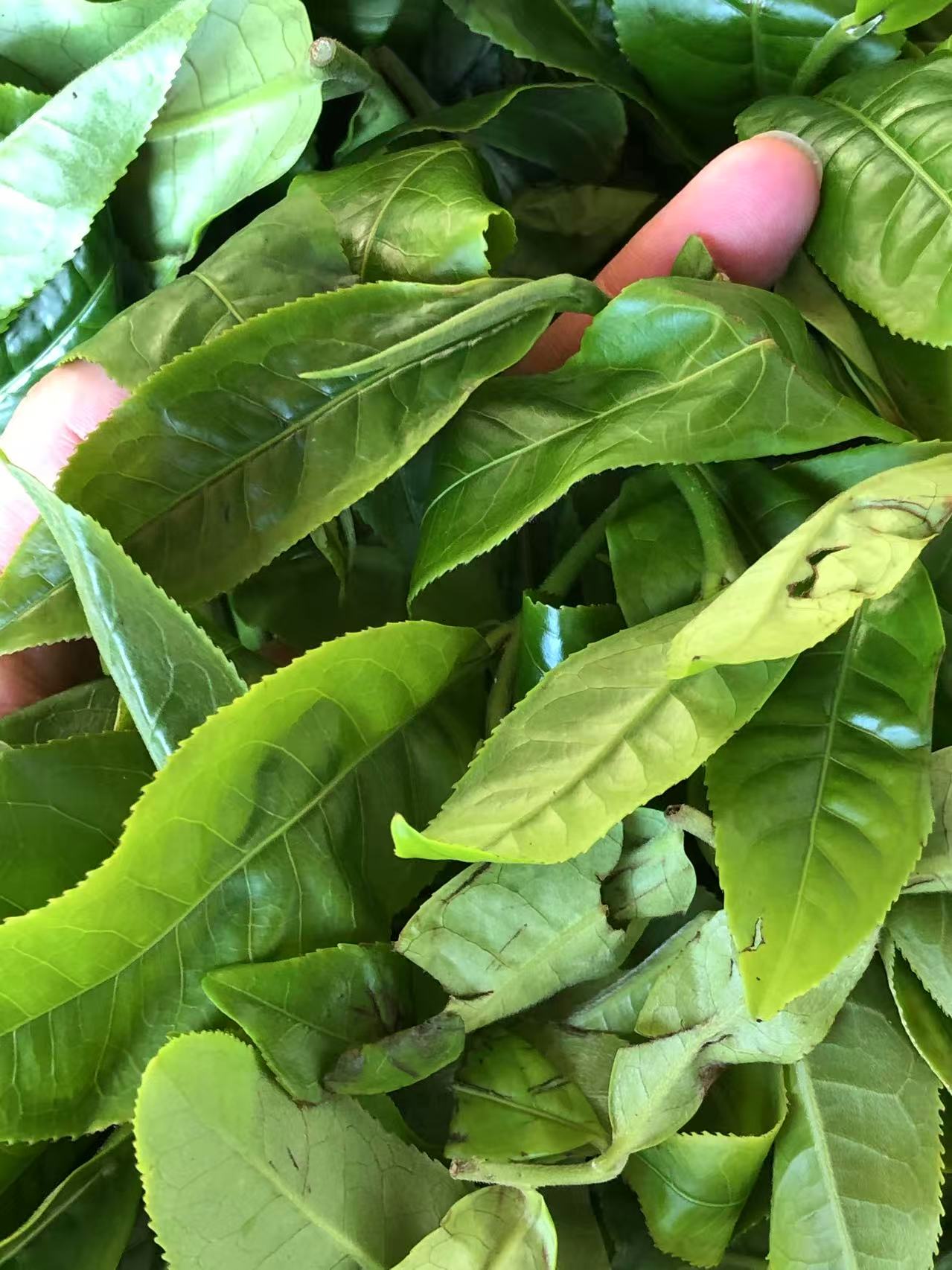
When I bring friends to the Jinggu tea mountains, I point out the large-leaf tea trees for them to see. Those leaves are genuinely enormous — a single leaf can cover your entire palm. The buds are as plump as a little finger, densely coated with white down. Large-leaf tea plants have deep root systems that absorb more minerals and trace elements from the soil, naturally resulting in richer internal compounds. The national standard sets requirements for white tea's water extract content, and Yunnan large-leaf white tea can reach over 35% — a direct reflection of its substantial foundation.
Fuding's small-leaf variety, on the other hand, has small, delicate leaves with slender buds. It has white down too, but not as dramatically. The small-leaf variety excels in fine, elegant flavor — sweet and smooth, with a gentle charm reminiscent of Jiangnan water towns. Its water extract content typically falls between 28% and 30%, lower than the large-leaf variety, but it pursues refinement rather than intensity — competing on delicacy, not concentration.
Similar Process, Completely Different Approach
White tea processing sounds simple — just two steps: withering and drying. But these same two steps produce entirely different styles in Yunnan versus Fuding.
In Yunnan, white tea is dried by sun or low-temperature baking after withering, with drying temperatures kept between 40-60°C. The low temperature preserves more active compounds, and enzyme activity isn't fully destroyed, leaving ample room for post-production transformation. That "sunshine flavor" you taste in Yunnan white tea comes directly from the sun-drying process.
Fuding white tea processing includes an additional roasting step, with drying temperatures reaching 70-110°C. The higher temperature causes certain compounds to transform, resulting in a clearer liquor, more thorough removal of grassy notes, and a clean, smooth sweetness on the palate. The national standard GB/T 22291 classifies white tea into Silver Needle, White Peony, Gongmei, and Shoumei grades — Fuding white tea follows this established system, which is very mature.
One more point worth mentioning: Yunnan white tea actually falls within the "new-process white tea" category. New-process white tea, created in 1968, adds a light rolling step to traditional white tea processing, making the tea liquor easier to extract. When Yunnan's large-leaf variety is made into white tea, it incorporates this approach, producing a more full-bodied and mellow flavor while still retaining white tea's essential character of no fixation and no heavy rolling.
In the Cup: The Difference Becomes Even Clearer
No matter how precise the data, nothing beats brewing a pot and tasting for yourself.
Every time I brew Yunnan white tea for tea friends, that full-bodied character shows up from the very first infusion. The liquor has substance — it's not a light, floating sweetness but a sweet aftertaste with real force behind it. And it's durable: with the large-leaf foundation, it still has flavor after seven or eight infusions. Age it a few years and drink it again, and the honey notes and medicinal aromas that develop from transformation can be truly addictive. We at Songdehao have an Ancient Tree White Tea Dragon Pearl, made from Jinggu ancient tree material — one pearl per brew, incredibly convenient for travel. We also have a 2022 premium-grade white tea loose tea that's been aged for over two years, currently in its prime transformation phase — sweet and smooth with a hint of floral honey aroma.
Fuding white tea offers an entirely different experience. Clear, sweet, and smooth — like drinking a mouthful of mountain spring water, clean and pure. Silver Needle in particular delivers a mouthful of downy fragrance with the first infusion, exquisitely delicate. Aged Fuding white tea cakes, when boiled, also develop date and medicinal aromas, but the overall style leans toward elegance — a completely different direction from Yunnan white tea's robustness.
I sometimes drink both myself. A pot of Fuding White Peony in the morning to refresh, then switch to Yunnan ancient tree white tea in the afternoon for slow savoring. No contradiction — each has its own merits.
Which One Suits You Better?
There's no standard answer to this question — it depends on your taste preference.
If you enjoy a full, weighty mouthfeel with a powerful sweet aftertaste, choose Yunnan white tea. The large-leaf variety's rich internal compounds produce a full-bodied, robust flavor suited for tea drinkers who like their tea "with some kick." Aged white tea cakes in particular, when boiled, release a rich medicinal aroma — a pot in winter warms you to the core.
If you prefer clean sweetness, delicate texture, and a gentle entry, choose Fuding white tea. Whether Silver Needle or White Peony, that pure, smooth sweetness is Fuding white tea's unique signature — perfect for leisurely sipping.
For beginners, I recommend starting with dragon pearls or loose tea. Dragon pearls are portable — one pearl per brew, no need to weigh leaves. Loose tea offers better value — buy a small amount first to test the flavor. If you prefer elegance, start with Fuding White Peony; if you like robustness, go straight for Yunnan ancient tree white tea. Drink enough and you'll develop your own judgment — far more reliable than anyone's recommendation.
Frequently Asked Questions
How long can Yunnan white tea be stored?
White tea has a saying: "one year tea, three years aged, seven years treasure." Yunnan large-leaf white tea, with its rich internal compounds, has great aging potential. Storage conditions: ventilated, away from light, and protected from odors.
Is Silver Needle from Yunnan or Fuding?
Silver Needle is a grade classified by raw material tenderness (single buds), not by origin. Both Fuding and Yunnan produce Silver Needle, but they use different tea varieties.
Which white tea should beginners choose?
We recommend starting with dragon pearls or loose tea. Dragon pearls are portable — one pearl per brew. Loose tea offers good value. If you prefer elegance, choose Fuding; if you prefer robustness, choose Yunnan.
Want to learn more about white tea? Contact us
Contact Us →
Follow the Songdehao Official Account
Enjoyed this article? Get original tea articles, buying guides, and tasting notes every week