Overcapacity is a cold; inflated prices are a chronic disease. A cold you can ride out. A chronic disease, left untreated, will kill you.
One Number Punctures the Entire Industry's Dignity
Let me start with a cold fact.
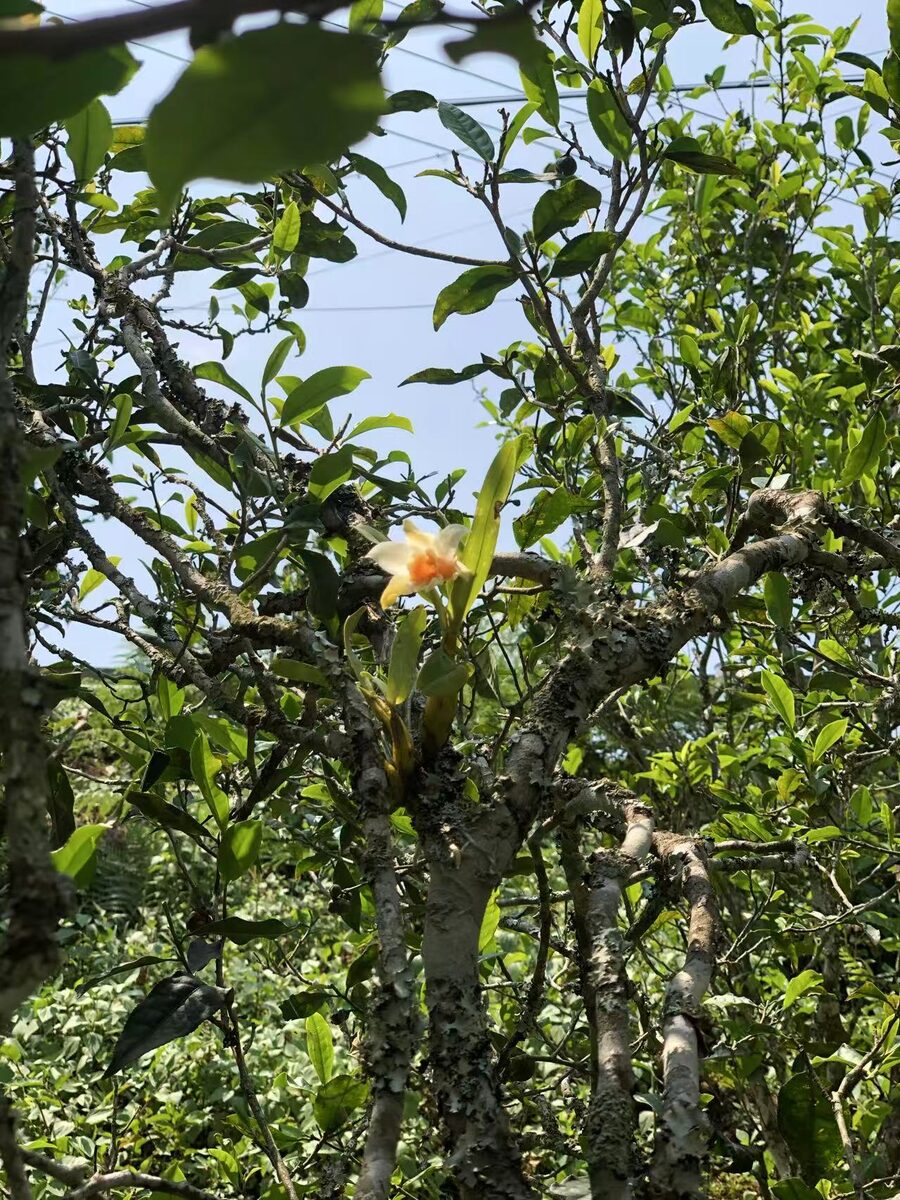
Bingdao Laozhai — the most celebrated ancient tea village in Mengku, Lincang, Yunnan. The true annual production of Bingdao Laozhai ancient tree tea is, at most, 3 tons. But the tea labeled "Bingdao ancient tree" circulating on the market? At least 300 tons.
Over 90% is blended — or has absolutely nothing to do with Bingdao.
This isn't just my claim. In June 2026, CCTV's "Financial Investigation" program went undercover and exposed a livestream account called "Yunnan Awei" — 780,000 followers, selling "Bingdao Laozhai Spring Harvest Ancient Tree Puer Tea" at 733 yuan/kg, with over 1,200 orders snapped up in seconds. When reporters visited Bingdao Laozhai on the ground, the village didn't even have the "Door No. 31" the livestream claimed. The "tea farmer" on camera wasn't from Bingdao either. Genuine Bingdao Laozhai large-tree tea costs at least 16,000 yuan/kg.
The same episode exposed another livestream, "Yijing Tea": 27 "tea farmers" sat in a row on camera, looking honest and simple, telling sob stories. When reporters found the payroll records — of the 27, only 7 were real tea farmers. The other 20 were hired actors at 800 yuan/day.
This isn't selling tea. This is making a movie.
Overcapacity? That's Just the Surface
The industry has been crying "overcapacity" for years. The numbers are indeed alarming:
According to the China Tea Marketing Association's "2025 China Tea Production and Sales Analysis Report," total national dry tea production in 2025 was 3.6403 million tons, with domestic sales of 2.3777 million tons. Over 1.2 million tons of tea piled up in warehouses every year. That's enough inventory for the entire country to drink for 18 months.
But overcapacity is a supply-side problem — tea gardens can be scaled back, raw materials can be further processed, overseas markets can be explored. What's truly lethal is the pricing.
A tea farmer sells raw tea for 100 yuan per 500g. After passing through collectors, wholesalers, regional distributors, and retail outlets — each layer adding 20%–30% — the price to the consumer doubles or even quintuples. According to 2026 channel breakdown data from Huaxinren Consulting, for a mid-to-high-end tea retailing at 1,000 yuan/500g, fresh leaf and raw material costs account for only 15%–20%, while marketing and distribution markups account for 60%–70%.
You spend 1,000 yuan on tea: 200 yuan is the tea, 800 yuan is distribution, packaging, and storytelling.
Puer tea is even more extreme. Lancang Ancient Tea, the "first Puer tea stock" listed in Hong Kong, saw inventory grow from 470 million yuan in 2020 to 894 million yuan in 2025, with inventory turnover days of about 3,131 — meaning a batch of tea sits in the warehouse for 8 years before completing one cycle. In 2024, they posted a massive loss of 308 million yuan, and in 2025, continued to lose 91 million yuan. However, in the first half of 2026, Lancang Ancient Tea finally turned a corner — revenue of 155 to 170 million yuan, up over 30% year-on-year, with net profit returning to black. And what drove the turnaround wasn't price hikes, but precisely "de-financialization," cost reduction, efficiency gains, and a return to consumer goods logic. When the direction is right, the road opens up. (Sources: Lancang Ancient Tea 2026 interim positive profit alert, Hong Kong Stock Exchange announcement dated July 27, 2026; reported by Sina Finance, Jiemian News, Securities Daily, and other media.) Another "first high-end Chinese tea stock," Bama Tea, has 3,773 stores with average monthly revenue per store of just 32,700 yuan — after rent and labor, franchisees are barely holding on.
Mountains of inventory, and prices still won't come down. That's the most twisted part of this industry.
How Did Prices Get Pushed to the Sky?
We make tea in Yunnan. We're on the tea mountains year-round, dealing with farmers and merchants. We see it clearly. Inflated prices are the result of three forces stacked together.
Force One: Concept Speculation — The Story Costs More Than the Tea.
"Ancient tree," "single-origin," "single plant," "pre-Qingming," "master-crafted" — these terms aren't inherently problematic. Core-production-area ancient tree tea is genuinely scarce and does have unique flavors. But on the market, vast quantities of ordinary tea get slapped with these labels, and prices instantly multiply tenfold. Plantation tea masquerades as ancient tree. Peripheral producing areas masquerade as famous mountains. Blended tea masquerades as single-origin. Consumers have no convenient way to verify provenance, so they're led around by the stories.
Even more insidious is "financial tea" — treating tea as an investment product, promising high-price buybacks to attract speculators. Guangzhou's Fangcun has seen multiple financial tea collapse incidents. When the bubble bursts, ordinary buyers who bought at the peak lose everything.
Force Two: Distribution Chains Too Long — Middlemen Bleed at Every Layer.
Traditional tea goes through at least four distribution tiers from farmer to consumer. Village-level collectors, primary processing factories, regional wholesalers, and physical retail stores — each layer needs warehousing, logistics, capital costs, and profit margins. Physical stores also bear rent and labor. Tea that costs 100 yuan in raw materials easily becomes 500 yuan at the terminal. The extra money consumers pay mostly feeds the middle layers — it has nothing to do with tea quality.
Force Three: The Gift Market Distorted Pricing Logic.
For over a decade, gift demand accounted for an extremely high proportion of tea consumption. When buying gifts, people look at packaging, price tags, and face — drinking quality came last. Merchants specifically make luxury gift boxes, with a single set of packaging costing upward of 100 yuan. When gift tea became the pricing benchmark, even everyday drinking tea prices got dragged up. The moment the gift market contracts, the entire pricing system is exposed.
Yunnan Is Changing — What Are We Doing?
Speaking of change, one thing is worth telling.
The Yunnan Ethnic Tea Culture Research Association began publishing the "Yunnan Tea Price Index" in 2023, putting spring tea prices for over a thousand villages across the province out in the open. As of March 2025, the "Tea Farmers' Home" platform has over 16,000 tea farmer members. Through direct sourcing without middlemen and an intelligent grading system, it has driven cost reductions of 22%, with pilot tea farmers seeing average household income increases of 1,286 yuan.
Dingba Mountain in Pu'er Jinggu is a living example — after the price index was published, local tea farmers' per capita annual income rose from 3,000 yuan to 80,000 yuan. Transparent prices didn't cheat consumers, and didn't shortchange farmers.
Price transparency is the key to breaking the deadlock.
This is also what Songdehao has been doing all along.
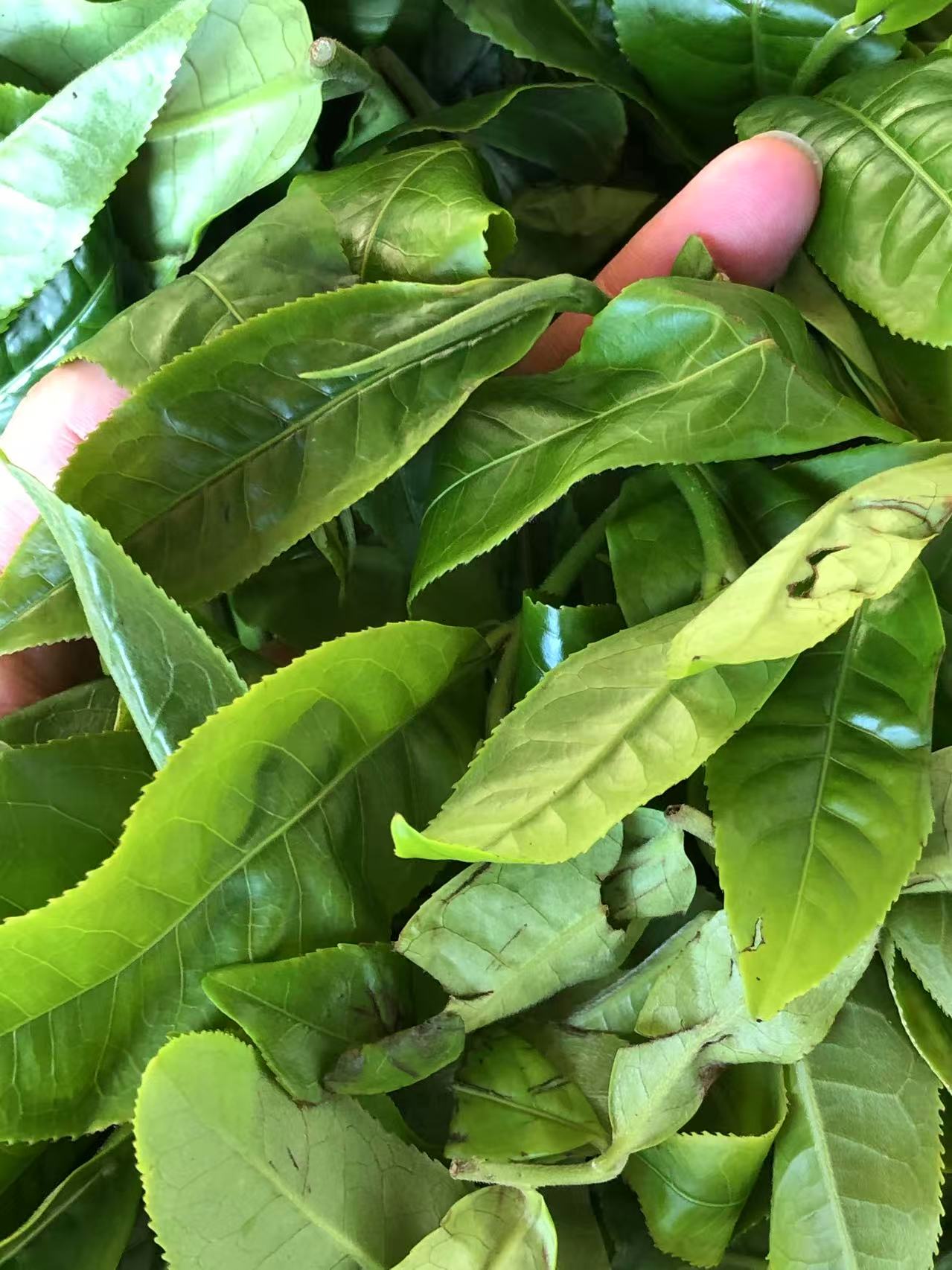
We're a Yunnan-based tea brand. We go to Nannuo Mountain, Yiwu, and Jinggu, sourcing raw materials and making tea at the source. We know the real cost of raw tea: fresh leaf picking, kill-green, rolling, sun-drying — every step has clear processing parameters and cost breakdowns. Kill-green wok temperature: about 300°C for Yiwu, about 275°C for Nannuo Mountain — this isn't a made-up story, it's data we've actually measured. For ripe tea pile fermentation, the pile temperature is controlled at 50–55°C, turned every 7 days, with a cycle of 25–30 days — these parameters are written in our tea-making records and in the national standard.
We know how much a good cup of tea actually costs. And we know how much you've been overcharged.
Songdehao's approach is simple:
First, price transparency. For our teas, we clearly state which producing area the raw material comes from, what tree age, what processing method, and what the cost breakdown is. No made-up stories, no fake origin labels, no mystification.
Second, cutting out unnecessary middlemen. From tea mountain to consumer, we shorten the chain as much as possible. More of what you pay goes to the tea itself, not to layers of distribution and fancy packaging.
Third, let quality speak. The standard for good tea isn't complicated — tightly rolled dry leaves, clear liquor color, pure aroma, balanced flavor, sweet aftertaste with mouthwatering effect. Resilient, lively infused leaves. These are the fundamentals of tea appreciation. You don't need to hear a story — your tongue will tell you the answer.
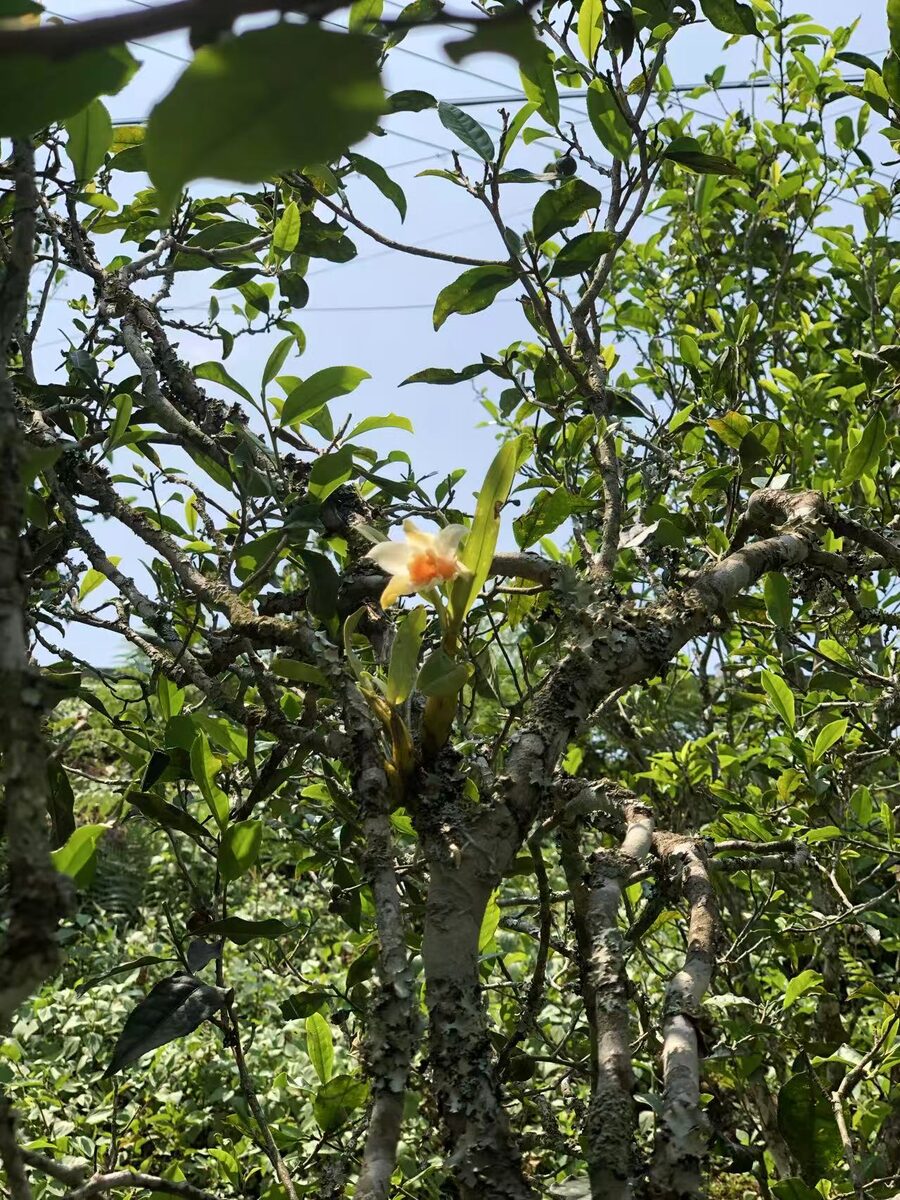
Take our Yiwu raw tea. Yiwu tea's signature is a delicate mouthfeel, soft and gentle, with a long sweet aftertaste — many tea friends use it as their Puer entry point. The 2014 Yiwu aged tea has dry leaves in glossy brown-green, liquor in translucent orange-yellow. On the palate, a soft honey aroma comes first, then the bitterness fades, and a sweet, smooth sensation rises slowly from the back of the throat. This flavor evolution is the natural transformation bestowed by time — no marketing copy can replace it.
Or take our Bulang Mountain raw tea. Bulang tea is known for powerful tea energy and weighty, brew-resistant character. New raw tea has pronounced bitterness that dissipates quickly, with a swift sweet aftertaste and mouthwatering effect. After a few years of aging, the bitterness recedes, camphor and aged aromas gradually emerge, and the layering becomes increasingly complex. This transformation is verifiable chemical change — catechin condensation reduces bitterness, while water-soluble polysaccharide accumulation brings sweetness. It's not mysticism.
Some Honest Words
This industry doesn't lack stories. What it lacks is honesty.
Tea farmers work hard growing and picking tea, selling raw tea for a few dozen to a hundred yuan per 500g, with razor-thin margins. Consumers just want a decent cup of tea, only to be deterred by prices in the hundreds or thousands. The enormous profits in between are eaten clean by layers of distribution and concept speculation. Farmers don't earn more, consumers don't spend less — the money is all burned where it shouldn't be.
Those livestreams exposed by CCTV hired actors to play tea farmers, repackaged plantation tea worth a few dozen yuan as "century-old ancient tree," and raked in tens of millions a month. What they earned wasn't tea money — it was trust money. Consumers' goodwill toward "helping farmers," their yearning for "ancient trees," their expectations of "direct-from-source" — all weaponized as harvesting tools.
When you see enough of this, you feel angry. And helpless. But anger and helplessness don't solve problems.
What solves problems is: make prices transparent, shorten distribution channels, make quality solid, and puncture the stories.
Tea is just tea. It's a leaf that, through kill-green, rolling, and drying, becomes a beverage in your cup. It can have regional differences, processing characteristics, and vintage variations. But it shouldn't be an intimidating luxury item, much less a prop in a scammer's hands.
We at Songdehao make tea in Yunnan. What we do isn't complicated: source good raw material from the tea mountains, process it according to standard methods, price it clearly, and let tea drinkers spend what they should spend and drink the tea they deserve.
It's that simple.
If you also think drinking tea shouldn't be this hard, come give us a try.
Songdehao · Yunnan affordable quality tea, transparent pricing, traceable quality
FAQ
How much does Bingdao Laozhai ancient tree tea produce annually?
True Bingdao Laozhai ancient tree tea has an annual production of at most 3 tons, but the tea labeled "Bingdao ancient tree" circulating on the market amounts to at least 300 tons. Over 90% is blended or has nothing to do with Bingdao at all. Genuine Bingdao Laozhai large-tree tea costs at least 16,000 yuan/kg.
What are the main reasons for inflated tea prices?
Inflated prices result from three forces combined: first, concept speculation — ordinary tea labeled as ancient tree or single-origin sees prices multiplied tenfold; second, excessively long distribution chains — from tea farmer to consumer through four tiers, each adding 20%-30% markup; third, the gift market distorting pricing logic, with luxury packaging driving up overall prices.
Where does the money go when you buy 1,000 yuan worth of tea?
According to 2026 channel breakdown data from Huaxinren Consulting, for a mid-to-high-end tea retailing at 1,000 yuan/500g, fresh leaf and raw material costs account for only 15%-20%, while marketing and distribution markups account for 60%-70%. In other words, 200 yuan is the tea, and 800 yuan is distribution, packaging, and storytelling.
How can you avoid buying fake "famous mountain ancient tree tea"?
Choose brands with transparent pricing, and check whether the origin, tree age, processing method, and cost breakdown are clearly stated. Famous mountain ancient tree tea priced 30% below market rate is almost certainly a scam. Good tea standards: tightly rolled dry leaves, clear liquor color, pure aroma, balanced flavor, sweet aftertaste with mouthwatering effect, and resilient, lively infused leaves.
Want to learn more about affordable Yunnan tea? Contact us
Contact Us →
Follow "Songdehao" Official Account
Get more tea knowledge, buying guides, and tasting notes. We share firsthand stories from Yunnan's ancient tea mountains — from the tea fields to your cup.