Yiwu Tea Mountain Report: The Gentle Power of Pu'er's Queen
August 21, 2026
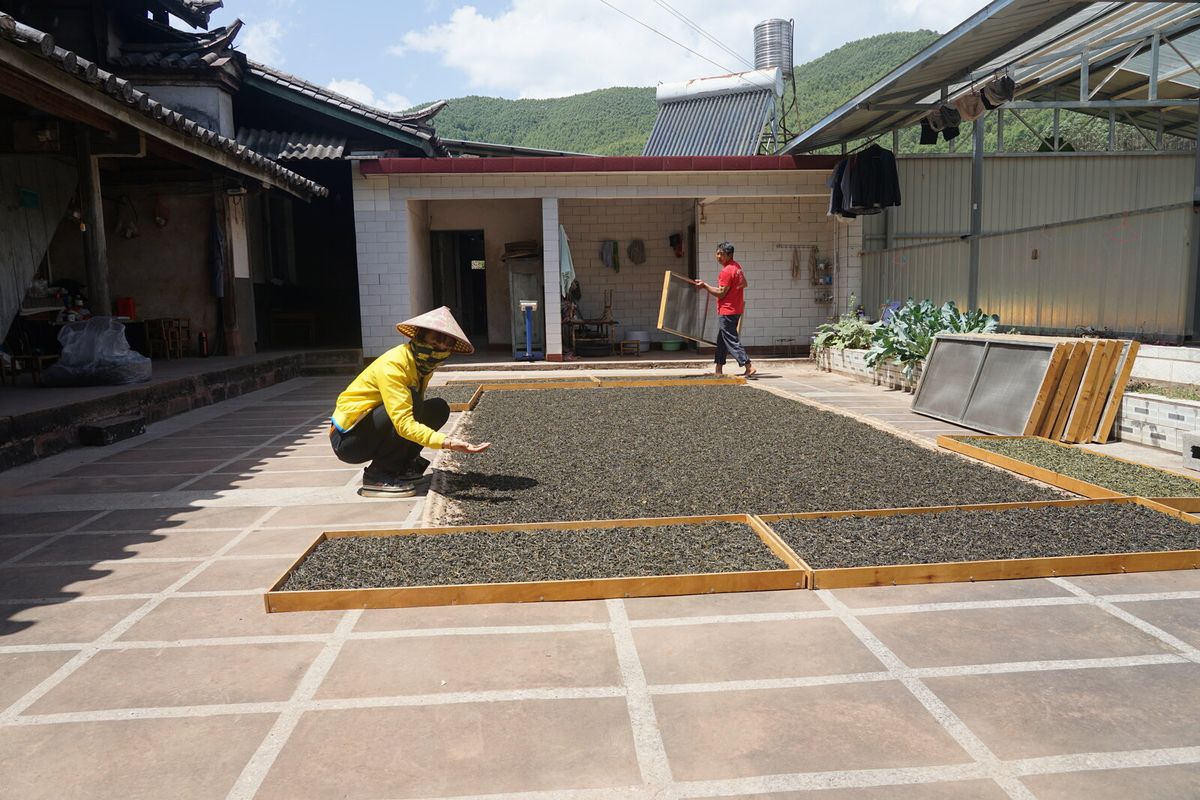
Every spring tea season, I make a trip to Yiwu.
Not to join the buzz — to source tea. Yiwu is in Mengla County, Xishuangbanna; from the county town it's another two-plus hours of mountain roads, and the bends keep multiplying the further in you go. One year heading to Wan'gong, we hit a landslide halfway and were stuck for over three hours. By the time the road cleared, dusk was falling. The driver smiled and said, that's Yiwu for you — to see it, you first have to pass its test.
The scenery outside the window shifts too. After Menglun, the broad valley basins gradually disappear; mountains stack upon mountains; rubber plantations slowly give way to mixed broadleaf forest and tea gardens. Roll down the window and you can smell the damp earth and clean breath of plants; the temperature drops several degrees below the foothills. That's when you know you're close.
But once you're up on the mountain and brew a cup of freshly made maocha, you'll feel every jolt of the journey was worth it.
Today I want to talk about the Yiwu in my eyes — not the "first of the Six Ancient Tea Mountains" from reference books, but a place you can only truly understand after walking it, drinking it, and sitting down to chat with the tea farmers.
Yiwu Old Street: On the Worn Flagstones, You Can Almost Hear the Echo of Tribute Tea
When I arrive in Yiwu, I'm in the habit of walking the old street first.
The old street isn't long. The flagstones have been polished to a sheen by the years; on both sides stand old brick-and-timber houses, some still bearing the weathered signboards of tea firms from a bygone era. During the Yongzheng reign of the Qing dynasty, Yiwu was already the distribution hub for pu'er tribute tea — tea from the mountains was carried here from every village, steamed and pressed into cakes, then transported by horse caravan all the way to Kunming and on to the capital. In those days, Yiwu's prosperity was built on the sound of horse bells and the fragrance of tea along the entire flagstone road.
Today's old street is much quieter. Elderly residents sit at doorways smoking bamboo water pipes; some former tea firm sites have been converted into tea houses, and pushing the door open gets you a cup of first-spring tea. The bustle of eating and drinking is on the new street — a morning bowl of mixian or migan rice noodles is the unshakable Yiwu breakfast. But just lower your head to look at the flagstone ruts worn by horse hooves, then lift your eyes to the encircling green mountains, and you'll know the heritage of this land has never left.
In the tea world, Yiwu is called the "Queen of Tea Mountains." This "queen" doesn't mean second place; it's the counterpart to "king." Bulang Mountain is bold, like a king; Yiwu is gentle, like a queen. One leads the charge, the other holds the rear — without either, the map of Yunnan tea would be incomplete.
Mahei and Luoshuidong: A Walk Through the Ancient Gardens Teaches More Than Ten Books
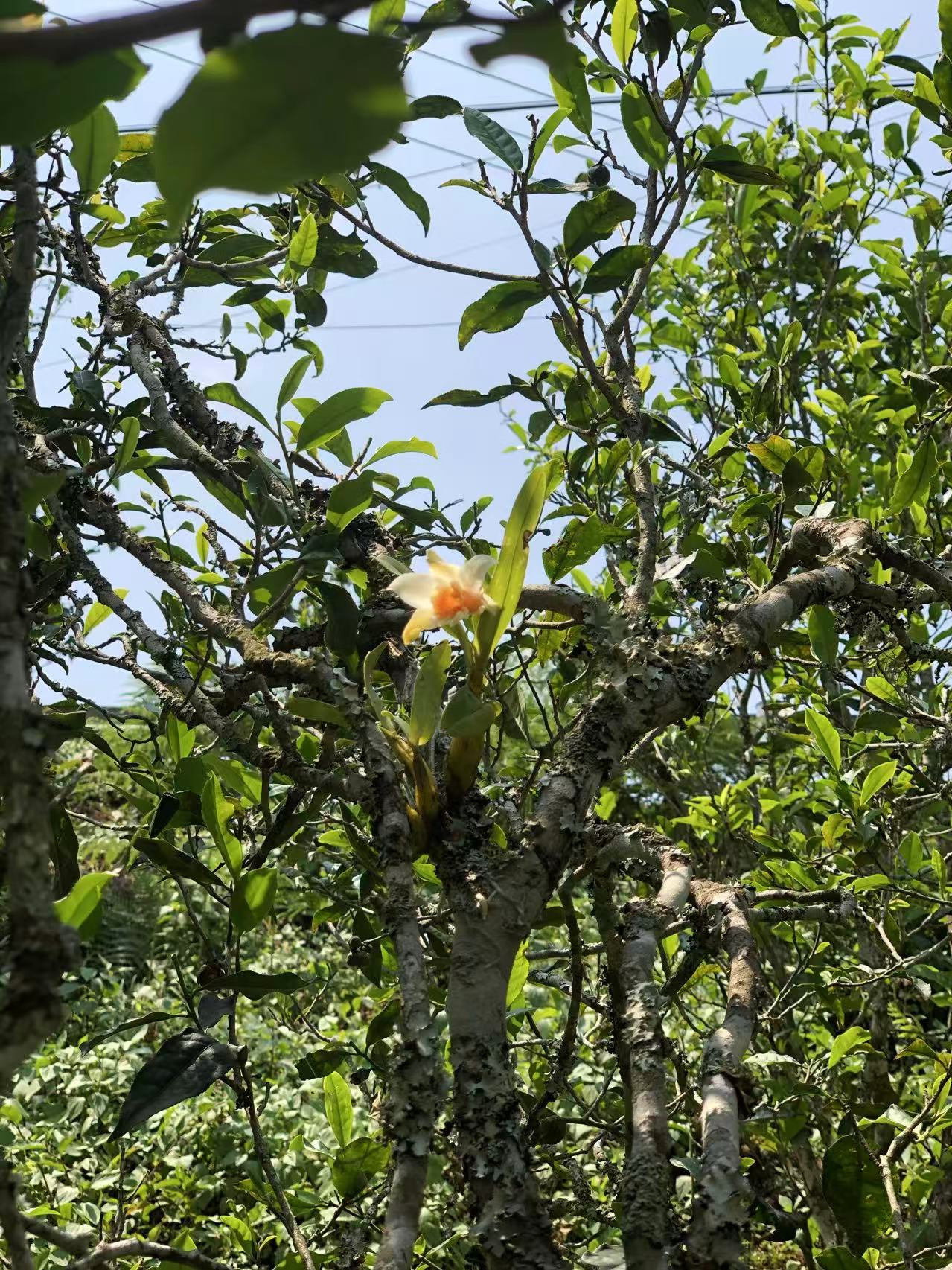
Further in from the old street lie the various tea-producing villages. The one I visit most is Mahei.
Mahei's tea gardens sit on mountains at over 1,000 meters elevation. The tea trees aren't the neat, evenly spaced rows you might picture — they're scattered here and there through the forest, growing alongside camphor trees, banyans, and all kinds of broadleaf trees I can't name. This "under-forest planting" is the norm in Yiwu's ancient gardens: the tea has shade, fallen leaves serve as fertilizer, and biodiversity naturally forms a small ecosystem.
Walking through the garden, the ground underfoot is soft humus; overhead, sunlight leaks through gaps in the leaves. The tea trees aren't tall, but their branches are gnarled and powerful; some old trunks are covered in moss and ferns. The tea farmers say, don't be fooled by the fact that these trees are only plucked in spring and autumn — their roots run deep, drawing minerals from the mountain stone, which is what gives the made tea its thickness.
This approach — no fertilizer, no pesticides, letting tea trees coexist with the forest — doesn't produce high yields, but the product is clean. During spring tea season, pickers head up the mountain before dawn, hand-plucking one bud with two leaves, one bud with three leaves, carrying it down only when the basket is full. A single tree's spring production can sometimes amount to just a few kilograms of fresh leaves.
Not far from Mahei is Luoshuidong. By the edge of the village stands an iconic large tea tree, several hundred years old, with a trunk too broad for one person to wrap their arms around, still sprouting every spring. Standing beneath it and looking up, you feel small — all your years in the tea business, and it has already stood here for centuries.
"Soft" Isn't "Bland": Many People Misjudge Yiwu on the First Sip
You often hear it said: Yiwu tea is too mild, not as punchy as Bulang.
Every time I hear that, I want to put in a word for Yiwu. Yiwu's softness isn't blandness — it's another kind of power.
Think of it this way. Bulang tea is like a straight right: on entry it announces itself — heavy bitter base, powerful tea qi, huigan surging like a cavalry charge; within three steeps you're won over. Yiwu isn't like that. Yiwu is like water. The first sip feels gentle, with faint floral and honey notes; you think that's all there is. But after three steeps, huigan begins at the base of the tongue, and a slow sweetness rises in the throat, traveling downward; even after a dozen infusions, the mouth is still fragrant.
That's what "soft" means: refined soup texture, smooth entry, low bitterness, but a long tail. It doesn't fight you head-on; it circles around behind you, and by the time you realize what's happening, it has already won you over.
I have a friend who drinks Bulang year-round, with a heavy palate, who said Yiwu "goes down too easy, lacks a punch." During spring tea season I dragged him up to Mahei; at a farmer's house we drank from first-spring through third-spring, then pulled out a Mahei that had been stored seven or eight years to compare side by side. The new tea's floral-honey aroma, the mid-palate huigan, the settled honey depth of the aged tea — through the whole session, he put down his cup and said, I was drinking too fast before; Yiwu's strength comes later.
So "Bulang is king, Yiwu is queen" really isn't about one being better. The king has the king's aura; the queen has the queen's craft. Firm and soft together — that's pu'er in full.
Tasting a New Tea at a Farmer's House: How It Changes from the First to the Tenth Steep
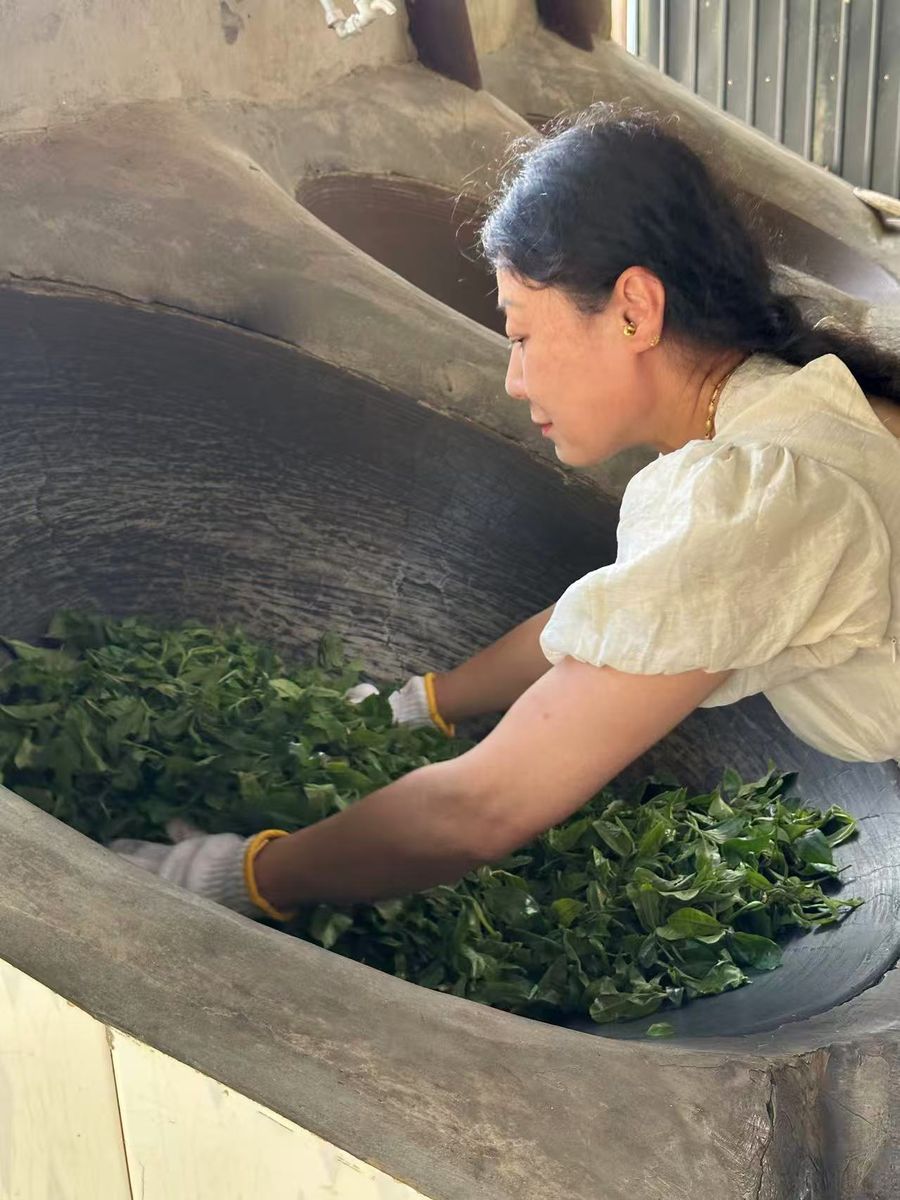
The most critical part of sourcing tea is tasting.
At a tea farmer's house in Mahei, the table was set with freshly sun-dried spring maocha. A white porcelain gaiwan was placed, water boiled, and the tasting began. First infusion, quick pour: the liquor was golden and translucent; sniffing the lid, a fresh floral-honey aroma, like stepping into a white-flower forest just after rain. On the palate it was gentle, almost non-bitter, with the faintest astringency on the tongue's surface that quickly dissolved.
By the third or fourth infusion, the liquor began to thicken. It went down like a mouthful of honey water, gliding smoothly through the throat; huigan welled slowly from the base of the tongue, and saliva flooded both cheeks. That's when you understand that the "mildness" of the first two steeps was just setup — the real show is the middle.
Around the seventh or eighth infusion, the aroma shifted from floral-honey to a more grounded honey note; the liquor remained bright, with sweetness more prominent. The tail was rock-sugar sweet; after drinking, the mouth felt cool and every breath carried fragrance. The farmer, refilling water beside us, put it plainly: Yiwu tea is like that — it doesn't flaunt itself, but it's steeping-durable, drinkable, and leaves a memory.
That day we drank to the twelfth or thirteenth infusion, the leaves unfurled fully open, the spent leaves soft and resilient. Good tea isn't afraid to sit through to the end.
After the New Tea, a Twelve-Year-Old Batch of Yiwu
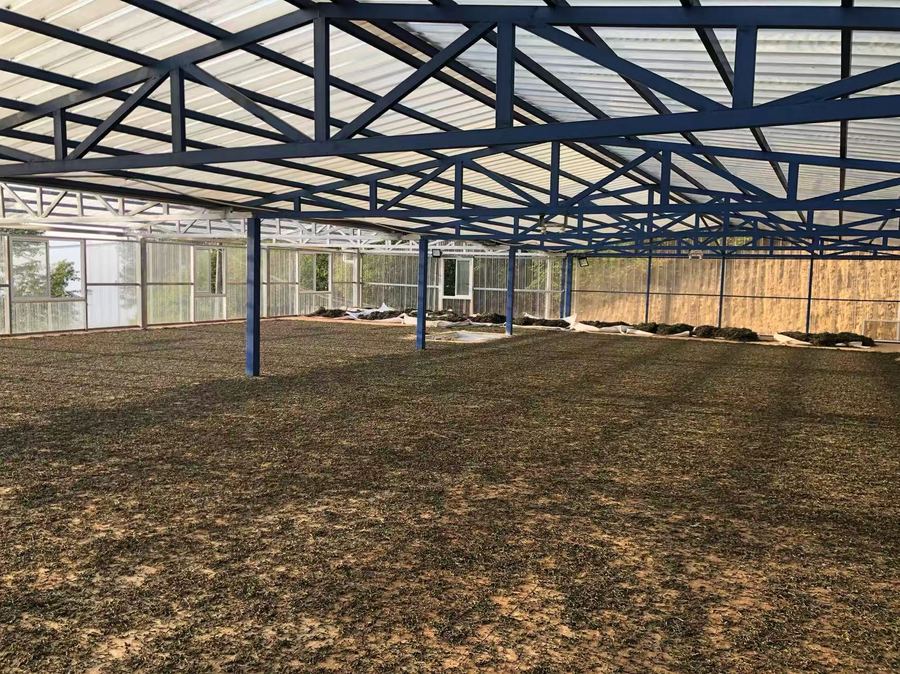
Back from the mountain, I always pull an older-vintage Yiwu from the warehouse to taste alongside.
We have a batch of 2014 Yiwu ancient tree raw pu'er stored away; this year makes exactly twelve. Opening a cake, the surface has turned from its original dark green to a deep, glossy brown; the leaves are plump and bold; the dry-leaf aroma carries aged notes wrapped around a honey core.
Brewed, you can clearly taste what time has done. The high-pitched floral-honey of new tea has settled into a thicker honey aroma with a hint of wood; the liquor has shifted from golden to deep amber, like old beeswax; the mouthfeel is more than a grade thicker than the new tea — round and full on entry, with a sweetness that rises slowly from deep in the throat, remarkably persistent. The bitterness has all but faded over twelve years, leaving only dense, velvety texture and a long, lingering finish.
This is why Yiwu tea is worth storing. It's already delicious as new tea, and aging transforms it into something else again — the soft foundation remains, but time adds thickness and composure. Like a person gentle in youth who gains real substance with age.
This 2014 Yiwu batch has limited stock. Friends who want to taste what "twelve years later" is like can reach out on WeChat to see what's still available.
As I write this, it's raining outside again. I think of the bends on Yiwu mountain, the dirt roads hastily reopened after landslides, the backs bent over plucking in the gardens.
What Yiwu has taught me is this: truly powerful things don't always shout the loudest. Softness isn't weakness — it's strength hidden in the soup, in the huigan, in twelve years of transformation, waiting for you to discover it slowly.
That, perhaps, is the gentle power of the Queen of Pu'er.
Frequently Asked Questions
Why is Yiwu tea called the Queen of Pu'er?
Yiwu is in Mengla County, Xishuangbanna, and is one of the Six Ancient Tea Mountains. During the Qing dynasty, it was the distribution center for pu'er tribute tea. Its tea character is gentle and refined, with pronounced floral-honey aroma and long-lasting huigan, contrasting with the bold, powerful character of Bulang Mountain. The tea world says "Bulang is king, Yiwu is queen" — describing two complementary styles, one firm and one soft, not a ranking.
What does Yiwu's "softness" actually taste like?
Yiwu's softness isn't blandness — it's refined soup texture, smooth entry, low bitterness and astringency, but rich internal compounds. The early steeps show elegant floral-honey notes; in the middle, huigan and salivation well up slowly from the base of the tongue; the late steeps are sweet and round with a lingering aroma on the cup. Physically, the after-effect stretches on. It contrasts with Bulang's heavy bitter base and immediate impact.
What's the difference between Yiwu ancient tree tea and terrace tea?
Yiwu ancient tree tea is mostly arbor-type large-leaf variety, over 100 years old, with deep roots and rich internal compounds — the liquor has good thickness, steady aroma, and long-lasting huigan. Terrace tea is densely planted bush-type, with shallow roots and frequent plucking — the liquor tends to be thin, the aroma floats, and bitterness/astringency is more pronounced. Ancient tree tea is usually more expensive; when buying, focus on traceability and actual tasting rather than labels alone.

Follow "Songdehao" Official Account
Get more tea knowledge, brewing tips, and new arrival notifications
Want to learn more about Yunnan ancient tree tea, or taste the 2014 Yiwu? Reach out on WeChat
Contact Us →